At Insurance Quotes we’ve helped homeowners save on home insurance since for 18 years. Fill out our fast and simple form to compare the best local and national home insurance companies – all in one place.
We give you the tools to easily compare multiple homeowners insurance quotes all at once. With an A+ BBB rating we help over 30K+ people a day find the best home insurance rates with policies that cover all of your home coverage needs. We can help you keep one of your biggest investments – your home – covered with multiple policy options to choose from.
Do I Need Homeowner’s Insurance?
Homeowner’s insurance isn’t required by law; however, if you have a mortgage on your home then the lender will most likely legally require you to have an insurance plan that insures 100% of the home’s replacement cost until your home loan is paid in full. If you currently own your home you are technically not required to have home insurance coverage by law. For most homeowners however, having home insurance coverage is a no-brainer as it insures you can avoid substantial financial loss to one of your greatest assets should something happen to it.
If you were to experience a situation where your home was destroyed as well as all of your personal belongings, for most this would be an incredibly challenging financial situation to recover from. The benefit of knowing your home and belongings are insured can be a great peace of mind even for those who have fully paid off their home’s mortgage.
Explore Home Insurance Costs by State and City
Home insurance rates can vary dramatically depending on where you live. Comparing average rates by state and city helps you understand what’s normal in your area, identify potential savings, and avoid overpaying. Whether you’re moving, buying your first home, or reviewing your current policy, these location-based guides provide actionable data and insights to help you make confident decisions.
The following city-level guides provide real-time home insurance cost data, local market trends, and insights tailored to each ZIP code. Whether you’re buying a home or renewing your policy, these resources help you make more informed decisions.
These state-level guides offer a broader view of home insurance pricing and coverage factors across entire regions. You’ll find comparisons by provider, disaster risk zones, and policy types to help you better understand where your state fits into the national average.
Data sources: Quadrant Information Services (real-time rate data), publicly available insurer filings, and proprietary quote form data from InsuranceQuotes.com (2025).
What Does House Insurance Cover?
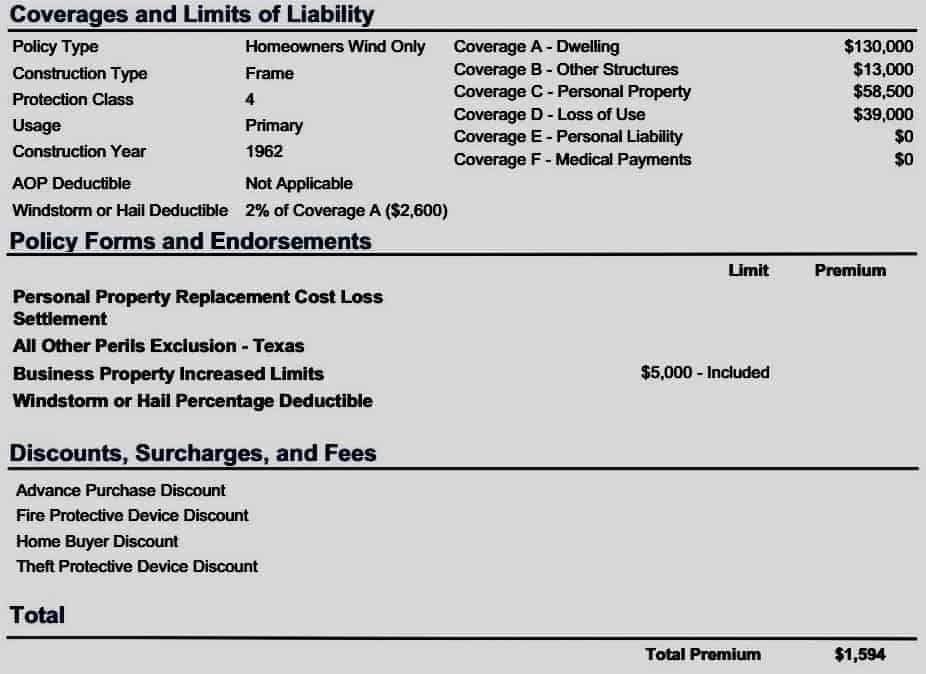
Home insurance coverage can vary from plan to plan. The most common events that you will be covered from under a homeowner insurance policy include protection from property damage such as fire, lightning strike, hurricanes, wind storms, hail storms, and water damage (usually from busted pipes). Some natural disaster damages are not included under a regular policy such as earthquakes, mudslides, and flood damage. Below is an example of a home insurance quote:
Dwelling insurance covers any damage to the home or attached building structures such as a garage or home’s front porch.
Personal Property:
Personal property liability covers paying for replacement or repairs to any belongings that are damaged and or stolen in certain events covered under your policy.
Other Structures:
This coverage takes care of any other structures that are stand-alone detached entities on your land such as a tool shed, fence, pool, or mailbox.
Liability:
Personal liability reimburses you for any legal action taken on you for accidental injury or property damages to others that occur on your property.
Additional Living Expenses (ALE):
ALE coverage reimburses the costs associated with being displaced from your home such as temporary lodging, food purchase, and other living expenses occurred when your home is unavailable to live in.
Medical Payment:
Medical payment coverage protects against any costs of minor injuries that someone not living on the property sustains while visiting.
What is the Average Cost for Home Insurance?
The average cost of home insurance is around $1,200 to $1,500 a year. However, your final cost for home insurance will depend on many factors such as your state, city, and any added insurance coverage you may need for your home. You can also receive discounts for bundling your home and auto insurance policies as well. It is best to compare multiple homeowner insurance quotes to get the best rates. The factors that affect costs are listed below.
What Factors Determine My Homeowners Insurance Costs?
House age and materials used: The older your house, the higher the risk of losses or damages from general deterioration or from external factors like harsh weather conditions. Houses made of lightweight materials, like wood, will be more likely to get damaged than houses made from brick, stone or cement. The state of the roof on your house needs to be considered too because if replacement or repair is needed, the costs of labor and materials increase with time.
Home security: Having an efficient home security system in your house has a two-fold effect – it can reduce your insurance premium while also giving extra protection to your family and your possessions against theft and vandalism. Updating the locks in your home can help in reducing the cost of your premium, as can installing fire alarms or sprinkler systems.
House renovations:If you have done or started any renovations to your home, you have added value to your home. Some renovations that add value include updating pipes or adding additions. Make sure you advise your homeowners insurance provider as these new improvements need to be accounted for in your policy and premium rates.
Home Location:If your home is in an area that is prone to natural disasters you can expect to pay a higher premium from the risk associated with that location. You may also want to check out if your ZIP code carries higher premiums. ZIP codes with higher numbers of theft claims, for example, could hike your insurance premiums up 3-5 percent.
There are many factors to consider when thinking about home insurance. Getting the right information and putting together a personalized, affordable plan for your home can only be done by the experts. It only takes a few minutes of your time to get your free homeowner’s insurance quote. Contact us today to compare multiple insurance quotes or chat about your options.
Last updated: June 26, 2025 Brian is a veteran financial journalist and best-selling author with over two decades of experience covering insurance, personal finance, and Wall Street trends. He contributes regularly to major publications and helps ensure our content meets high standards of accuracy, clarity, and relevance.
World Cup 2026 Insurance Guide: How the biggest sporting event in North America is protected By Michael Giusti When the FIFA World Cup kicks off on June 11, 2026, it will be much more than a soccer tournament. Spanning more than five weeks and hosted across the…
Memorial Day weekend is the unofficial start of summer, and it is one of the busiest travel and hosting weekends of the year. Whether it’s a road trip, a flight across the country, or a backyard barbecue with friends and family, the long weekend comes with a…
It could be a staged accident, or it could be misinformation on an insurance form. Either way it is insurance fraud. Insurance fraud is widespread, costly and sometimes easier to commit than consumers realize. It affects nearly every policyholder through higher premiums, more difficult claims reviews and…
Weddings are one of the most significant financial and emotional investments many couples will ever make. Between the venue, catering, attire, travel, and everything in between, the cost of a modern wedding can rival that of a car, or even a down payment on a home. That…
What is the Average Monthly Cost for Home Insurance?
Home insurance costs will vary depending on a many factors. On average you can expect to pay around $328 a month or $3,942 a year for a 3 bedroom updated home in a rural area.
Is Homeowner’s Insurance Required?
Though homeowner’s insurance is not required legally by any state, if you have a mortgage through a bank or lender – you will always be required to have house insurance on the property.
What Does Home Insurance Cover?
A standard home insurance policy will usually cover things like damages or destruction of a home including interior and exteriors, a loss due to theft, and liability if someone is harmed on your property. There are additional coverage options for different property types.
Autumn Cafiero Giusti is a licensed life and health insurance broker and award-winning journalist with more than 20 years of experience. She writes extensively about flood, Medicare, home, and life insurance for publications like U.S. News and CBS News.