How Much Does Car Insurance Cost in Alaska?
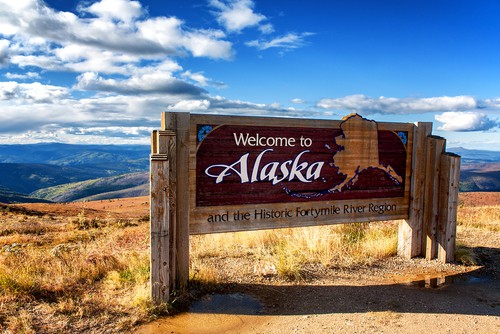
Alaska, the largest and northernmost state in the United States, is a land of unparalleled natural beauty and wilderness adventures. Known as the “Last Frontier,” Alaska’s vast and untamed landscapes include towering mountain ranges, sprawling glaciers, pristine rivers, and a rugged coastline teeming with wildlife and plenty of options for drivers wanting to hit the road.
Average Alaska Car Insurance Costs:
- State Minimum Liability: You can expect to pay $73 a month or $881 a year.
- Full Coverage: You can expect to pay $269 a month or $3,231 a year.
InsuranceQuotes cost rates are pulled from our real-time auto insurance database from recent quotes in your city – Rates are based on a used car driver who is single, middle aged & has a clean driving record. Read on to learn about the cheapest local rates filtered by insurance providers, new cars, vehicle types and age.
Drivers in AK should compare multiple car insurance coverage options that may be cheaper than the average rates – we will breakdown costs throughout this guide. Knowing average auto insurance costs beforehand is helpful when using InsuranceQuotes to compare free local and national provider quotes so you can know what to expect when searching for a new policy.





Who Has the Cheapest Car Insurance in Alaska?
- In Alaska the cheapest auto insurance providers on average are Allstate, USAA and GEICO.
- State minimum liability car insurance starts at $45 a month or $540 a year.
- Full coverage car insurance would cost around $348 a month or $2,371 a year.
Here is a breakdown of average costs from the cheapest local insurance providers in the state from our data set of used-car drivers who are single, middle aged and have a clean driving record:
| Insurance Company: | Minimum Liability: | Monthly: | Full Coverage: | Monthly: |
|---|---|---|---|---|
| Allstate | $540 | $45 | $4,171 | $348 |
| USAA | $570 | $48 | $2,684 | $224 |
| GEICO | $711 | $59 | $2,371 | $198 |
| State Farm | $802 | $67 | $2,969 | $247 |
| Progressive | $1,782 | $149 | $3,959 | $330 |
| Average Cost: | $881 | $73 | $3,231 | $269 |
Compare Average Alaska Car Insurance Costs for Cities
When comparing local car insurance premiums in Alaska, the city and zip code you live in will affect overall costs. Drivers living in more populated urban areas often pay more than those who live in rural areas with less population and potential for accidents. Use the table below to search for your city and see how much on average you should be paying locally for minimum and full coverage policies:
| AK City: | Minimum Liability: | Monthly: | Full Coverage: | Monthly: |
|---|---|---|---|---|
| Adak | $841 | $70 | $3,222 | $269 |
| Akiachak | $839 | $70 | $3,208 | $267 |
| Akiak | $839 | $70 | $3,227 | $269 |
| Akutan | $819 | $68 | $3,140 | $262 |
| Alakanuk | $825 | $69 | $3,138 | $262 |
| Aleknagik | $809 | $67 | $3,143 | $262 |
| Allakaket | $834 | $69 | $3,245 | $270 |
| Ambler | $833 | $69 | $3,233 | $269 |
| Anaktuvuk Pass | $833 | $69 | $3,233 | $269 |
| Anchor Point | $870 | $72 | $3,134 | $261 |
| Anchorage | $1,299 | $108 | $3,646 | $304 |
| Anderson | $770 | $64 | $3,345 | $279 |
| Angoon | $733 | $61 | $2,737 | $228 |
| Aniak | $839 | $70 | $3,227 | $269 |
| Anvik | $842 | $70 | $3,224 | $269 |
| Arctic Village | $837 | $70 | $3,258 | $272 |
| Atka | $840 | $70 | $3,221 | $268 |
| Atqasuk | $828 | $69 | $3,250 | $271 |
| Auke Bay | $797 | $66 | $2,793 | $233 |
| Badger | $898 | $75 | $3,385 | $282 |
Popular Auto Insurance Cost Guides by City
See a more in depth guide for auto insurance costs broken down by popular cities in Alaska.

Auto Insurance Rates by Age in Alaska
Statistics show that younger drivers, particularly teenagers and drivers in their early twenties, are more likely to be involved in accidents due to their limited driving experience and potential risky behavior on the road. Drivers older than 25 will see a significant drop in their auto policy costs as they are moved into the middle aged cost tier group for coverage.
Alaska will use age as a factor that influences your auto rates and quotes you receive. Younger drivers tend to face higher annual premiums compared to mature, more experienced drivers.
* Full Coverage – Average Costs by Age:
- 17 – 25 years: $4,737 yearly – $395 monthly
- 25 – 54 years: $2,347 yearly – $196 monthly
- 55+ years: $2,498 yearly – $207 monthly
* State Minimum Liability – Average Costs by Age:
- 17 – 25 years: $1,280 yearly – $107 monthly
- 25 – 54 years: $626 yearly – $52 monthly
- 55+ years: $727 yearly – $61 monthly
Here is a full breakdown of the average costs for car insurance by age in Alaska:
| Age: | Minimum Liability: | Monthly: | Full Coverage: | Monthly: |
|---|---|---|---|---|
| 17 | $1,967 | $164 | $6,886 | $574 |
| 18 | $1,660 | $138 | $5,966 | $497 |
| 20 | $1,147 | $96 | $4,533 | $378 |
| 22 | $875 | $73 | $3,373 | $281 |
| 24 | $752 | $63 | $2,928 | $244 |
| 29 | $641 | $53 | $2,474 | $206 |
| 34 | $630 | $52 | $2,383 | $199 |
| 39 | $627 | $52 | $2,361 | $197 |
| 44 | $625 | $52 | $2,335 | $195 |
| 49 | $625 | $52 | $2,318 | $193 |
| 54 | $610 | $51 | $2,208 | $184 |
| 64 | $615 | $51 | $2,162 | $180 |
| 74 | $752 | $63 | $2,583 | $215 |
| 76 | $814 | $68 | $2,722 | $227 |
How Much Car Insurance Do I Need in Alaska?
Alaska is unique in the United States – drivers must carry a minimum of liability insurance, as long as you live in a part of the state that also required you to register your vehicle. That means, for more than 300 communities in rural Alaska, carrying auto insurance is not legally required for most drivers.
Here are the minimum amounts of liability you should have in Alaska for the parts of the states that do require it:
- Bodily Injury Liability Coverage:
- $50,000 per person for bodily injury.
- $100,000 per accident for bodily injury if multiple people are injured.
- Property Damage Liability Coverage:
- $25,000 per accident for property damage.
- Uninsured/Underinsured Motorist Coverage:
- $50,000 per person for bodily injury.
- $100,000 per accident for bodily injury if multiple people are injured.
We recommend purchasing higher levels of coverage, especially if you have assets to protect or if you want to ensure that you’re adequately covered in case of a severe accident. You may also want to consider additional types of coverage, such as:
- Collision Coverage: This covers the cost of repairs to your own vehicle in the event of an accident, regardless of who is at fault.
- Comprehensive Coverage: This coverage protects your vehicle from non-collision events, such as theft, vandalism, and natural disasters.
The right amount of car insurance for you depends on your individual circumstances, including your assets, budget, and risk tolerance.
How Much Does a Driving Record Violation Increase Insurance Costs?
Driving violations can have a significant impact on your car insurance costs in Alaska, as they indicate a higher level of risk to insurance providers. When you receive a driving violation, such as a speeding ticket or a DUI, your insurance company may consider you a higher-risk driver, which can lead to an increase in your insurance premiums for the foreseeable future.
Here is a breakdown of full coverage car insurance cost increases with driving violations:
- Clean Driving Record: Average annual premium cost of $2,685
- Speeding Tickets: 16% increase of an extra $419 a year at $3,104
- At-Fault Accident: 30% increase of an extra $816 a year at $3,501
- DUI/DWI: 35% increase of an extra $949 a year at $3,634
| Driving Violation: | Minimum Liability: | Monthly: | Full Coverage: | Monthly: |
|---|---|---|---|---|
| Clean Record | $741 | $62 | $2,685 | $224 |
| 1 Speeding Violation | $844 | $70 | $3,104 | $259 |
| 1 At-Fault Accident | $962 | $80 | $3,501 | $292 |
| 1 DUI Violation | $979 | $82 | $3,634 | $303 |
How Credit Scores Affect Alaska Car Insurance Rates
Alaska does not restrict insurers from using credit-based insurance scores, and the gap is significant: drivers with poor credit pay around $127 per month, compared to about $79 per month for drivers with excellent credit — roughly a 61% increase. Looked at annually, poor-credit drivers average close to $3,048 per year versus $1,971 for good-credit drivers. Improving your credit score is one of the few factors within your control that can meaningfully lower your Alaska premium.
Things to Know About Auto Insurance in Alaska
- Alaska law requires insurance companies to offer a written quote for uninsured motorists coverage. Insurance companies must provide you with a variety of coverage options. The insurance company is required to insure you for this coverage if you don’t officially reject it.
- As an Alaska resident, you can exclude a driver in your household. If a driver in your household is a greater risk than others, your insurance company may ask to exclude him or her.
- Insurance companies may use your credit information. They use this information to set rates and determine who they insure. However, changes to the laws in the state have set guidelines about the type of information used and how it is considered by insurance companies. This protects the consumer to some extent, as insurance companies can no longer flat out deny you coverage based on a poor credit score.
- If you don’t purchase insurance, you must have the means to cover damages or injury to the other person in the event of an accident. You can post a bond or self-insure, however, the DMV must authorize self-insurance.
Important Information About Moving to Alaska
If you move to Alaska, you have 30 days to get a driver’s license. To get a license, you must pass a written knowledge test, an alcohol and drug awareness test, and a vision test. You must also show proof of your legal name and your current address.
You also have 10 days to register your vehicle, unless you have moved to one of the 300 rural communities in the state that doesn’t require vehicle registration.
Understanding Driving Laws in Alaska
If you drive in Alaska, you must use a hands-free device to talk on the phone and cannot text while driving. Talking on the phone using a hand or texting while driving is illegal and can result in stiff penalties.
Alaska encourages drivers to report dangerous drivers. The state provides information on what to look for, and signs along the roadways remind drivers to call emergency services if they see anyone driving dangerously.
Frequently Asked Questions About Alaska Auto Insurance
What other types of coverage should you get?
The law requires only liability insurance, but you may consider other things like uninsured motorists coverage. In addition, if your car is new or you took out a loan, you should consider collision and comprehensive, which cover the cost to repair or replace your car.
What happens if you only have minimum coverage and your car gets damaged in an accident?
Liability coverage only covers the other person in the event of injury or death when the other person’s property is damaged. To cover your own vehicle, you’ll need collision or comprehensive insurance, or both.
What if you’re in an accident and the other driver doesn’t have coverage?
If you have uninsured motorists coverage, you will be covered up to your limits. If not, you are responsible for repairing or replacing your vehicle.
Can I carry electronic proof of insurance?
Yes. Alaska is among a majority of states that allow electronic proof of auto insurance at traffic stops. You simply have to have your insurance provider’s app downloaded onto your smartphone.
How much is car insurance in Alaska per month?
Car insurance in Alaska averages approximately $66 per month for minimum coverage and $180 per month for full coverage in 2026. Alaska’s above-average rates reflect several unique factors: the state has some of the highest minimum liability requirements in the country at 50/100/25, remote road conditions increase accident severity and repair costs significantly, and parts and labor costs in Alaska run well above the continental U.S. average due to shipping logistics. State Farm offers the most affordable rates in Alaska at approximately $52 per month for minimum coverage. Anchorage, as Alaska’s largest population center, carries the highest in-state rates.
What are Alaska’s minimum car insurance requirements?
Alaska requires significantly higher minimum liability coverage than most states: 50/100/25 — $50,000 per person and $100,000 per accident for bodily injury liability, plus $25,000 in property damage liability. These minimums rank among the highest nationally and reflect Alaska’s recognition that severe accidents in remote areas, where emergency response and medical transport are costly and slow, create higher-than-average financial liability exposure. Alaska is a tort state with no mandatory PIP requirement. Alaska does not mandate uninsured motorist coverage, though a significant portion of Alaska drivers — estimated at 16 percent — carry no insurance.
Why is car insurance more expensive in Alaska than the lower 48?
Alaska car insurance runs above the national average for three structural reasons. First, Alaska’s remote geography means that vehicle repairs, parts, and towing all cost significantly more than in the continental U.S. — a simple collision in a rural Alaska location can cost twice as much to process as an equivalent accident in a lower-48 state due to logistics. Second, Alaska’s mandatory 50/100/25 minimum coverage is among the highest in the country, building in more required coverage than most states. Third, Alaska’s severe weather conditions — ice, snow, and permafrost heave — cause higher-than-average road damage and accident rates during winter months.
Who has the cheapest car insurance in Alaska?
State Farm is consistently the most affordable car insurance option in Alaska at approximately $52 per month for minimum coverage, well below the state average of $66 per month. USAA is the best option for military members and their families stationed at Joint Base Elmendorf-Richardson, Fort Wainwright, Eielson Air Force Base, or Fort Greely — all significant Alaska military installations. GEICO offers competitive minimum coverage rates below the state average. Progressive is the best choice for Alaska drivers with violations or accidents on their record.
Is comprehensive coverage important for Alaska drivers?
Yes — comprehensive coverage is essential for Alaska drivers for multiple reasons. Moose collisions are far more common and dangerous in Alaska than anywhere else in the country; a single moose strike can total most vehicles and cause severe injuries. Moose strikes are comprehensive claims, not collision claims. Alaska’s extreme cold also causes hail damage and ice storms that damage vehicles. Remote location means a totaled vehicle can be extraordinarily difficult and expensive to replace. Comprehensive coverage in Alaska typically costs $25 to $45 per month added to a policy — critical protection given the unique severity of Alaska-specific vehicle hazards.
How much does a DUI raise car insurance rates in Alaska?
A DUI/DWI conviction raises average full-coverage car insurance rates in Alaska by about 35%, adding roughly $949 per year to bring the average annual premium to around $3,634 (up from about $2,685 with a clean record). Drivers convicted of a DUI in Alaska will also typically need to file an SR-22 with the state to maintain their driving privileges.
How does credit score affect car insurance rates in Alaska?
Alaska does not restrict insurers from using credit-based insurance scores, and the gap is significant: drivers with poor credit pay around $127 per month, compared to about $79 per month for drivers with excellent credit — roughly a 61% increase. Annually, that works out to close to $3,048 for poor-credit drivers versus $1,971 for good-credit drivers, making credit one of the biggest factors Alaska drivers can control.
Alaska’s Remote Roads: Why Car Repairs Cost More and Coverage Matters More
Alaska’s geography makes vehicle accidents uniquely expensive compared to the lower 48 states. The Dalton Highway, Glenn Highway, Parks Highway, and hundreds of unpaved Alaska roads often have no cell coverage, minimal emergency services, and towing distances measured in hundreds of miles. A collision that would cost $3,000 to process in suburban California can cost $8,000 or more in rural Alaska by the time towing, storage, parts shipping, and labor are factored in. Alaska’s insurance premiums reflect this elevated cost reality. Anchorage drivers pay the highest in-state rates due to traffic density, while drivers in smaller communities like Fairbanks, Juneau, Sitka, and Kenai pay slightly less — though still above continental U.S. averages. Alaska’s mandatory 50/100/25 minimum coverage is among the highest in the country precisely because the state’s legislature recognized that serious accidents in remote areas create extraordinary financial exposure for all parties involved.
Moose Collisions: Alaska’s Most Dangerous and Costly Comprehensive Claim
Alaska leads the nation in moose-vehicle collisions by a significant margin. An adult bull moose weighs up to 1,500 pounds — striking one at highway speeds is often fatal for vehicle occupants and almost always totals the vehicle. Unlike deer collisions in the lower 48, which are common but survivable, moose collisions in Alaska represent a genuine life-safety threat. Alaska averages 500 to 900 moose-vehicle collisions per year, concentrated along the Parks Highway, Glenn Highway, Sterling Highway, and roads around Anchorage and the Mat-Su Valley. Moose strikes are covered exclusively under comprehensive insurance — not collision coverage. Alaska drivers who carry only liability and collision have zero coverage for one of the state’s most common and catastrophic vehicle events. Comprehensive coverage is not optional in Alaska; it is a fundamental safety net.
- About the Author
- Latest Posts

Michael Giusti is a senior insurance analyst, business journalist, and university professor with over 20 years of experience. He serves as department chair at Loyola University New Orleans and contributes to Insurance Thought Leadership, U.S. News, and other leading financial outlets.