Galveston, TX – Car Insurance Quotes
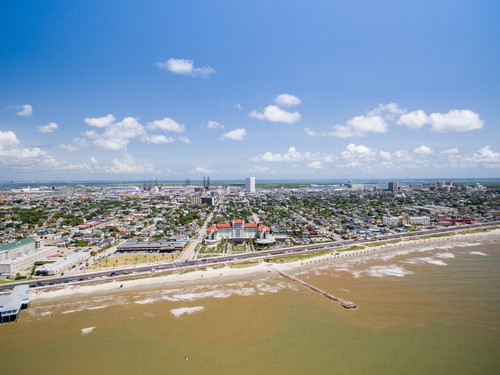
Galveston car insurance averages $203 per month for full coverage in 2026, based on InsuranceQuotes.com’s analysis of market rate data. State Farm offers competitive rates starting around $58/month. As a barrier island with a history of catastrophic storms including Hurricane Ike in 2008, Galveston carries significant hurricane season risk that makes comprehensive coverage especially important for local vehicle owners.
Finding affordable car insurance in Galveston, Texas doesn’t have to be a daunting task. With some research and consideration, you can find a policy that suits your needs and fits within your budget. Insurance Quotes can help you get car insurance quotes from top Texas providers fast for auto policies. Here’s a guide to help you find cheap car insurance in Galveston.
How Much Does Auto Insurance Cost in Galveston?
Drivers in Galveston can expect to pay around $1,216 yearly for state minimum coverage or $101 a month. If you are looking for full coverage you can expect to pay around $2,012 yearly or $168 a month. Galveston residents may be able to also get car insurance discounts such as good student, clean driving record and home, auto or boat insurance bundle savings.
| County: | Car | SUV: | Sports: | Truck: | Hybrid: |
|---|---|---|---|---|---|
| Galveston | $1,249 | $1,083 | $1,199 | $1,245 | $1,304 |
| Avg. Monthly Costs | $104.08 | $90.25 | $99.92 | $103.75 | $108.67 |
Cheap Galveston Auto Insurance Providers
The cheapest car insurance providers in Galveston is USAA, Texas Farm Bureau, AAA and Progressive for the average middle-aged single person who drives a used 4 door car with a clean driving record.
Here is a breakdown from our cost database for yearly state minimum coverage and full coverage by insurance provider for a used vehicle:
| Insurance Provider: | State Minimum: | Full Coverage: |
|---|---|---|
| USAA | $568 | $1,910 |
| Texas Farm Bureau | $638 | $2,025 |
| AAA | $763 | $2,284 |
| Progressive | $782 | $2,472 |
| GEICO | $908 | $2,424 |
| State Farm | $942 | $2,610 |
| All State | $1,292 | $2,750 |
New Vehicle Insurance Rates
The average cost for auto insurance for a new 2022 – 2023 four door vehicle on average will cost $738 for state minimum coverage and $2,656 for a full coverage policy. Below you’ll find a breakdown insurance providers for both coverage types on a new vehicle:
| Insurance Provider: | State Minimum: | Full Coverage: |
|---|---|---|
| USAA: | $530 | $2,280 |
| GEICO: | $838 | $2,588 |
| AAA: | $763 | $2,672 |
| Progressive: | $720 | $2,766 |
| State Farm: | $838 | $2,974 |
Car Insurance Costs by Age in TX
Age is a significant factor that affects TX auto insurance rates. Generally, younger and older drivers tend to pay higher premiums compared to drivers in the middle age group. Here’s how age can influence car insurance costs:
- Young drivers (under 25): Statistically, young and inexperienced drivers are more likely to be involved in accidents. They are also prone to riskier driving behaviors, such as speeding or distracted driving. As a result, insurance companies consider them higher risk, and their premiums are typically more expensive.
- Middle-aged drivers (25-65): This age group is generally considered to be more experienced and responsible behind the wheel. They are statistically involved in fewer accidents and tend to have lower insurance premiums compared to younger and older drivers.
- Senior drivers (65 and older): As drivers get older, their risk profile may change due to factors such as declining vision, slower reflexes, and potential health issues. Insurance companies may increase premiums for older drivers to reflect these factors and the increased likelihood of accidents.
Here is a comparison of the amounts you can expect to pay based on age in Texas – as you can see young drivers will pay much more on premiums until there is a significant drop in costs at age 29. Your auto policy continues to get cheaper until age 65 when it slowly starts increasing as you age.
| Driver’s Age: | State Minimum Coverage | Full Coverage |
|---|---|---|
| 17 | $2,686 | $7,193 |
| 18 | $2,346 | $6,376 |
| 20 | $1,664 | $4,752 |
| 22 | $1,248 | $3,659 |
| 24 | $1,068 | $3,172 |
| 29 | $865 | $2,654 |
| 34 | $833 | $2,530 |
| 39 | $829 | $2,496 |
| 44 | $825 | $2,460 |
| 49 | $813 | $2,425 |
| 54 | $791 | $2,329 |
| 64 | $807 | $2,270 |
| 74 | $982 | $2,622 |
| 76 | $1,049 | $2,761 |
How to Find Auto Insurance in Galveston
Why Galveston Car Insurance Is More Expensive Than the Texas Average
Galveston Island drivers pay more for car insurance than most Texas cities for reasons tied directly to geography. Understanding these factors helps you compare your rate against the right benchmark and maximize available discounts:
- Hurricane exposure: Galveston was devastated by Hurricane Ike in 2008 and sits at severe risk from Gulf of Mexico hurricanes. Comprehensive insurance pricing in Galveston reflects this catastrophic weather risk — expect to pay 15–25% more for comprehensive coverage than comparable inland Texas cities like Waco or Lubbock.
- Flooding and storm surge: Galveston Island’s low elevation means even tropical storms without hurricane strength cause significant flooding. Comprehensive coverage is essential here — not optional. Vehicle flood losses are common even in storms that don’t make major headlines.
- Tourism and seasonal traffic: Galveston’s beach tourism draws heavy visitor traffic particularly April–September, temporarily increasing traffic density and accident frequency for local drivers during peak season.
- Island geography limits escape routes: The I-45 causeway and ferry route are the only exits from Galveston Island. During evacuation events, traffic congestion is extreme, increasing accident risk at the worst possible time.
Galveston Car Insurance: What Comprehensive Coverage Actually Protects Against
For Galveston drivers, comprehensive coverage does more work than in almost any other Texas city. Here’s what it covers that matters specifically here:
- Hurricane wind damage — falling debris, downed power lines, and wind-driven objects are all comprehensive claims
- Storm surge flooding — if your vehicle is submerged in a storm surge, comprehensive pays for the vehicle loss (assuming you maintained coverage)
- Hail damage — severe hailstorms are common in the Houston-Galveston region and generate major claim volume
- Salt water corrosion from near-total submersion — comprehensive covers the vehicle loss; corrosion from ongoing salt air is a maintenance issue, not a covered claim
Important: Do not remove comprehensive coverage before hurricane season (June–November) to save money. The premium savings are minimal compared to the catastrophic potential loss. If your vehicle is paid off and older, evaluate whether the vehicle’s actual cash value justifies keeping full comprehensive — but in Galveston, the math usually supports keeping it.
How to Save on Galveston Car Insurance
- Compare State Farm, GEICO, and Allstate first. These three are competitive in Galveston. Texas Farm Bureau also offers strong rates for Galveston County residents who qualify for membership.
- Bundle home and auto. Texas bundling discounts average 12–18%. If you rent on Galveston Island, renters + auto bundles also yield meaningful savings.
- Keep comprehensive — but consider a higher deductible. Raising your comprehensive deductible from $500 to $1,000 can reduce the comprehensive premium by 10–15% while maintaining essential hurricane protection.
- Garage your vehicle when possible. A secured garage provides both security and comprehensive premium credits from most Galveston-area carriers.
- Ask about hurricane preparation discounts. Some Texas insurers offer modest credits for vehicle storage plans or hurricane-rated storage facilities on the island.
- Assess your insurance needs: Determine the type and level of coverage you require. Consider factors such as the value of your vehicle, your budget, and any specific coverage options you may need, such as liability, comprehensive, collision, or uninsured motorist coverage.
- Shop around and compare quotes: Obtain quotes from multiple insurance providers in Galveston. Online comparison websites or contacting insurance agents directly can help you gather quotes quickly. Make sure to provide accurate and consistent information when requesting quotes for an accurate comparison.
- Consider local and regional insurers: In addition to well-known national insurance companies, research local and regional insurers that operate in Galveston. Sometimes these companies offer competitive rates and personalized service that may suit your needs.
- Check for discounts: Inquire about any discounts offered by insurance providers. Common discounts include safe driver discounts, multi-policy discounts (bundling car insurance with other policies), good student discounts, and discounts for safety features installed in your vehicle. Take advantage of any discounts you qualify for to lower your premiums.
- Raise your deductible: Increasing your deductible can lower your insurance premiums. However, be sure to choose a deductible amount that you can comfortably afford to pay out of pocket in the event of a claim.
- Maintain a good driving record: A clean driving record is essential for obtaining affordable car insurance. Avoid accidents, traffic violations, and DUI convictions to maintain a good driving history. Insurance companies often offer lower rates to drivers with a history of safe driving.
- Evaluate your coverage needs periodically: Review your car insurance policy annually or when major life changes occur. As your circumstances change, your coverage needs may also change. Adjust your policy accordingly to avoid paying for unnecessary coverage or gaps in your protection.
- Consider usage-based insurance: Some insurance companies offer usage-based insurance programs where your premiums are based on your actual driving habits. This can be a cost-effective option if you are a safe and low-mileage driver.
- Seek advice from an insurance agent: If you’re unsure about the coverage options or have specific questions, consult an insurance agent. They can provide personalized guidance and help you find the most affordable options that meet your needs.
Remember, while finding cheap car insurance is important, it’s equally crucial to ensure you have adequate coverage for your circumstances. Consider the reputation and reliability of the insurance provider in addition to the cost.
Compare Car Insurance in Nearby Texas Cities
- Car insurance in Frisco, TX
- Car insurance in Corpus Christi, TX
- Car insurance in Beaumont, TX
- Car insurance in Waco, TX
See all Texas car insurance rates.
Car insurance in Galveston, TX averages $63/month for minimum coverage and $203/month for full coverage in 2026. State Farm offers competitive rates starting around $58/month. Comparing at least three quotes is essential in TX since rate differences between carriers can exceed $100/month for identical coverage.
TX requires minimum coverage of 30/60/25. TX is a tort state — the at-fault driver is responsible for the other party’s damages. Driving uninsured in TX can result in license suspension, fines, and an SR-22 filing requirement.
No. TX is a tort state. The driver who causes an accident is responsible for all resulting damages. Your liability coverage pays for the other party’s injuries and property damage when you are at fault.
For Galveston drivers in 2026, State Farm is among the most affordable options in TX, with rates starting around $58/month for minimum coverage. State Farm, GEICO, and Progressive are widely available in TX. Rate variation between carriers can exceed $50 to $100/month for identical coverage, making annual quote comparisons essential.
Galveston is a barrier island with significant hurricane exposure — Hurricane Ike caused catastrophic damage here in 2008. Comprehensive coverage, which pays for storm and flood damage to your vehicle, is especially important for Galveston drivers given this history. To lower your premium: (1) compare quotes from at least three carriers every year, (2) maintain a clean driving record, (3) bundle auto and home or renters for 5 to 15% savings, and (4) raise your deductible on full coverage to $1,000 to cut premiums 10 to 15%.
- About the Author
- Latest Posts

Michael Giusti is a senior insurance analyst, business journalist, and university professor with over 20 years of experience. He serves as department chair at Loyola University New Orleans and contributes to Insurance Thought Leadership, U.S. News, and other leading financial outlets.